

Good Practice Guides can be downloaded from this page.

The Road Haulage of Round Timber Code of Practice 2020
This 5th edition provides an overview of the technical and legal issues relating to road haulage. It is aimed at those directly involved in the transport of timber by road and the management of timber haulage. It covers stacking timber, the use of forest roads, loading logs, securing loads and unloading.

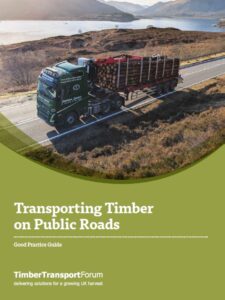
Transporting Timber on Public Roads 2026
This guidance is aimed at supporting local authorities and the forest industry in mitigating the impact of timber haulage on the rural road network. The document outlines good practice for how the forest industry engages with local authorities and other stakeholders to manage timber transport responsibly. It reflects voluntary, collaborative approaches developed by the sector to reduce impacts on communities and other road users, while supporting a sustainable, productive forest industry.
This is accompanied by a series of Our Timber; Our Roads; Our Communities guides, summary versions that explain the purpose of timber transport and the voluntary good-practice measures that have been developed. These documents together provide both an accessible overview and detailed reference for practitioners, local authorities, and community organisations.
- Our Timber; Our Roads; Our Communities: A Guide to Transporting Timber
- Our Timber; Our Roads; Our Communities: A Local Authority Guide to Transporting Timber
- Our Timber; Our Roads; Our Communities: A Community Guide to Transporting Timber.
Printed copies are available for free from the Timber Transport Forum.

Loading Timber from Roadside Forests
Loading Timber from Roadside Forests sets out good practice relating to the use of public roads and adjacent verges for forest harvesting operations – specifically the stacking of round timber and the loading of timber haulage vehicles. Under normal circumstances the public road should not be used for forestry harvesting operations. Where this is necessary it must be done with the formal permission of the relevant authority while managing operator and public safety. Printed copies are available for free from the Timber Transport Forum.

Tread Softly; Lower Impact Vehicles for Timber Haulage – Updated 2026
This good practice guide has been updated and refreshed with new foreword explaining how to use the document. It outlines the limitations of forest and public roads and describes the range of haulage vehicles used in timber transport.
Following input from timber hauliers, the vehicle selection table has been updated to better reflect vehicle impacts. Further additions include low ground pressure systems (LGP) vehicle configurations and truck wear factors, alongside an updated table for selecting appropriate vehicles.
Tread Softly should be read alongside Transporting Timber on Public Roads Good Practice Guidance and the Our Timber; Our Roads; Our communities position statements, which set out the wider partnership framework through which timber haulage is planned and managed. Vehicle configuration in Tread Softly is just one element of the broader approach supporting proportionate, collaborative decision making between the forest industry and roads authorities to protect infrastructure and manage impacts while enabling sustainable timber transport.
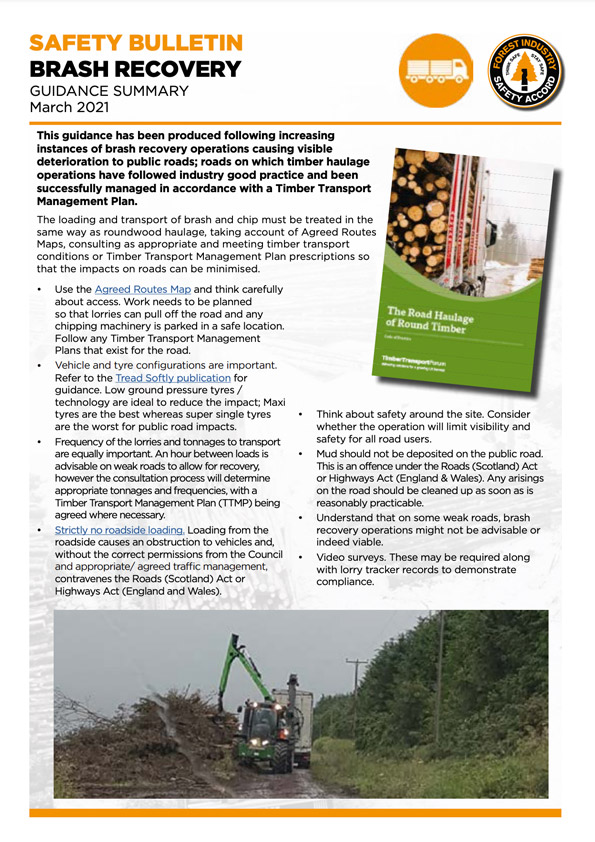
Brash Recovery
This guidance has been produced following increasing instances of brash recovery operations causing visible deterioration to public roads; roads on which timber haulage operations have followed industry good practice and been successfully managed in accordance with a Timber Transport Management Plan.
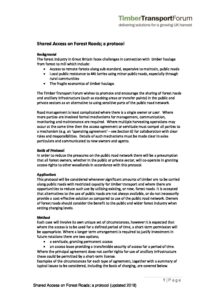
Shared Access on Forest Roads Protocol
The Timber Transport Planning Tool calculates traffic loads resulting from planned timber harvesting in Scotland and allows users to examine and adjust the forecast traffic loads on Scottish local roads based on changes to production activities. This tool was built by TRL in a project commissioned by the Timber Transport Forum and funded by Transport Scotland through the Scottish Road Research Board. This user guide explains how to use the tool.
CPC + F HGV Driver Training Videos
This series of training videos complements the CPC +F (Forestry) training course for HGV drivers using forest roads. The videos are an excellent resource for haulage operators and anyone else involved in timber haulage contracts, and cover all relevant topics and safety issues faced by the sector.
The Haulage on Fragile Roads video (Video 6) is an excellent tool to use when negotiating access routes and consulting with rural communities – demonstrating how the industry works to resolve access challenges.
